PURGATORY
2015
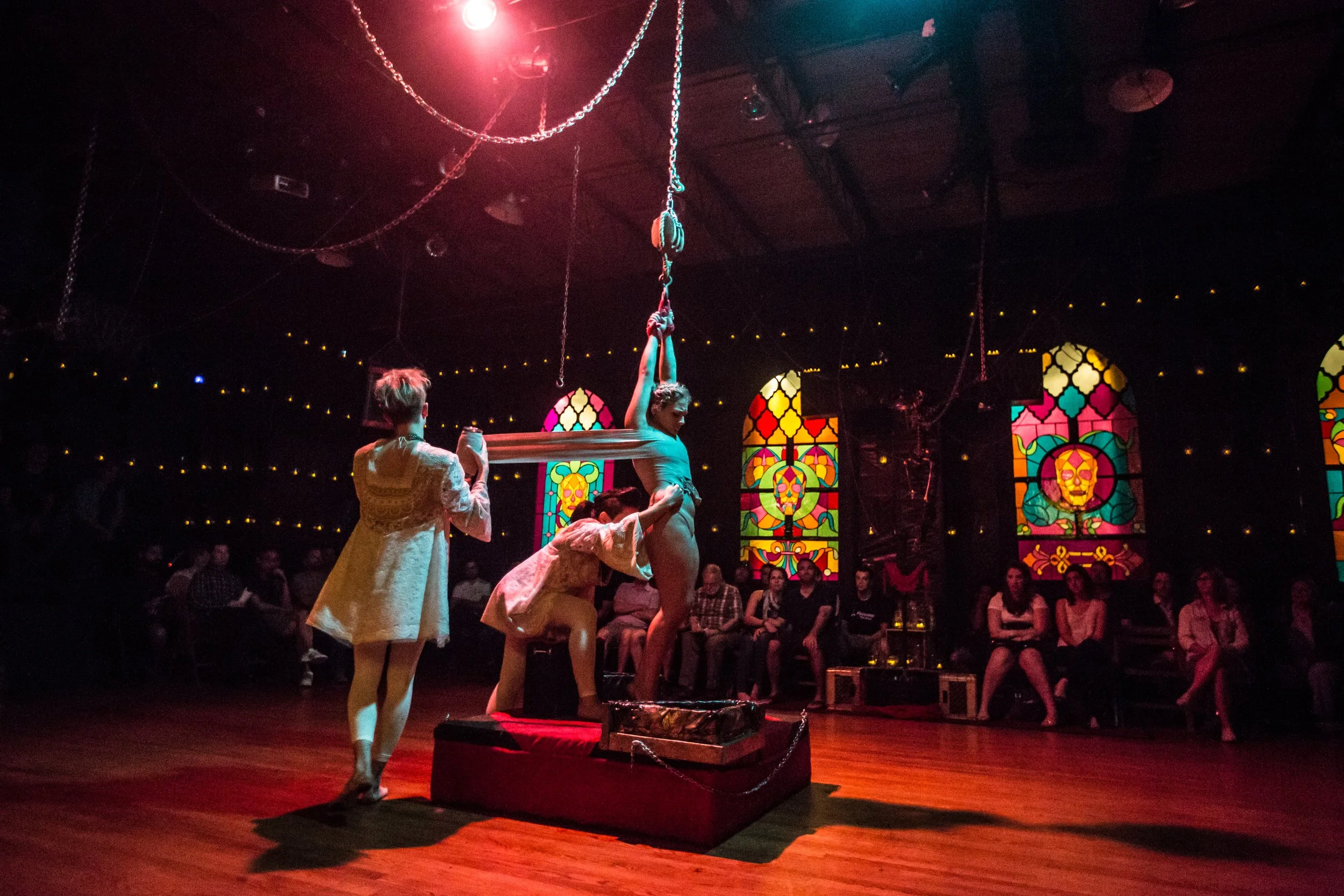
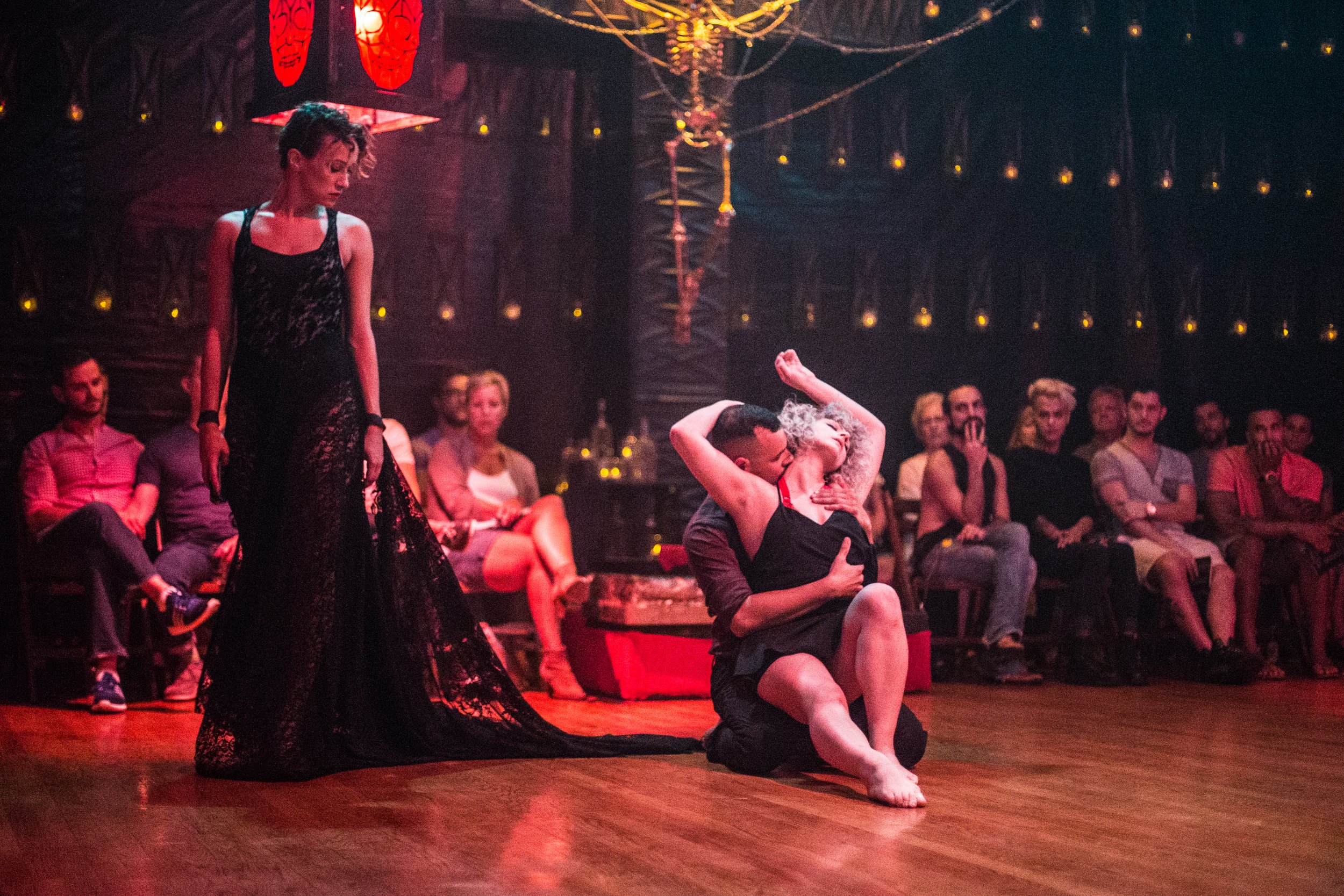
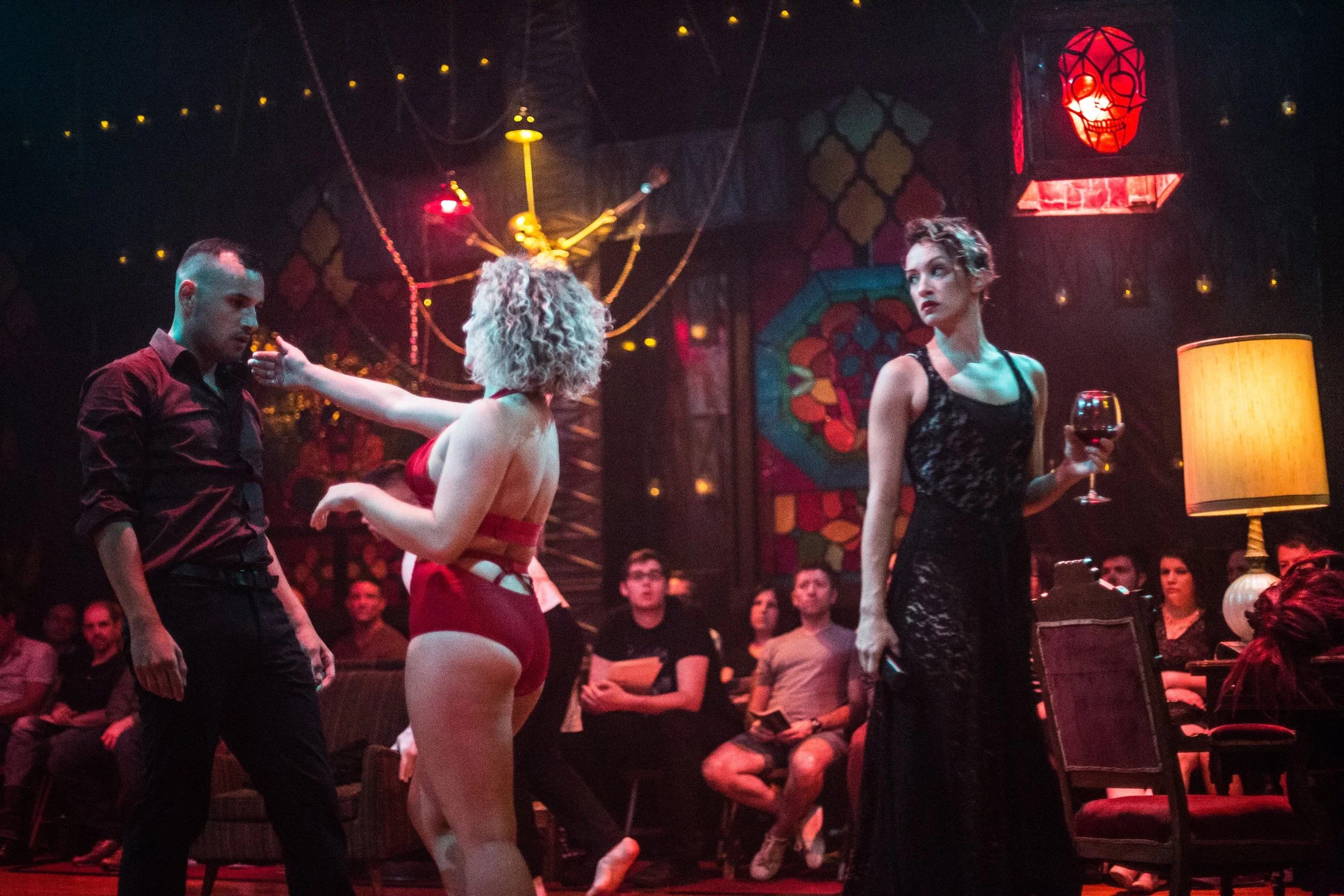
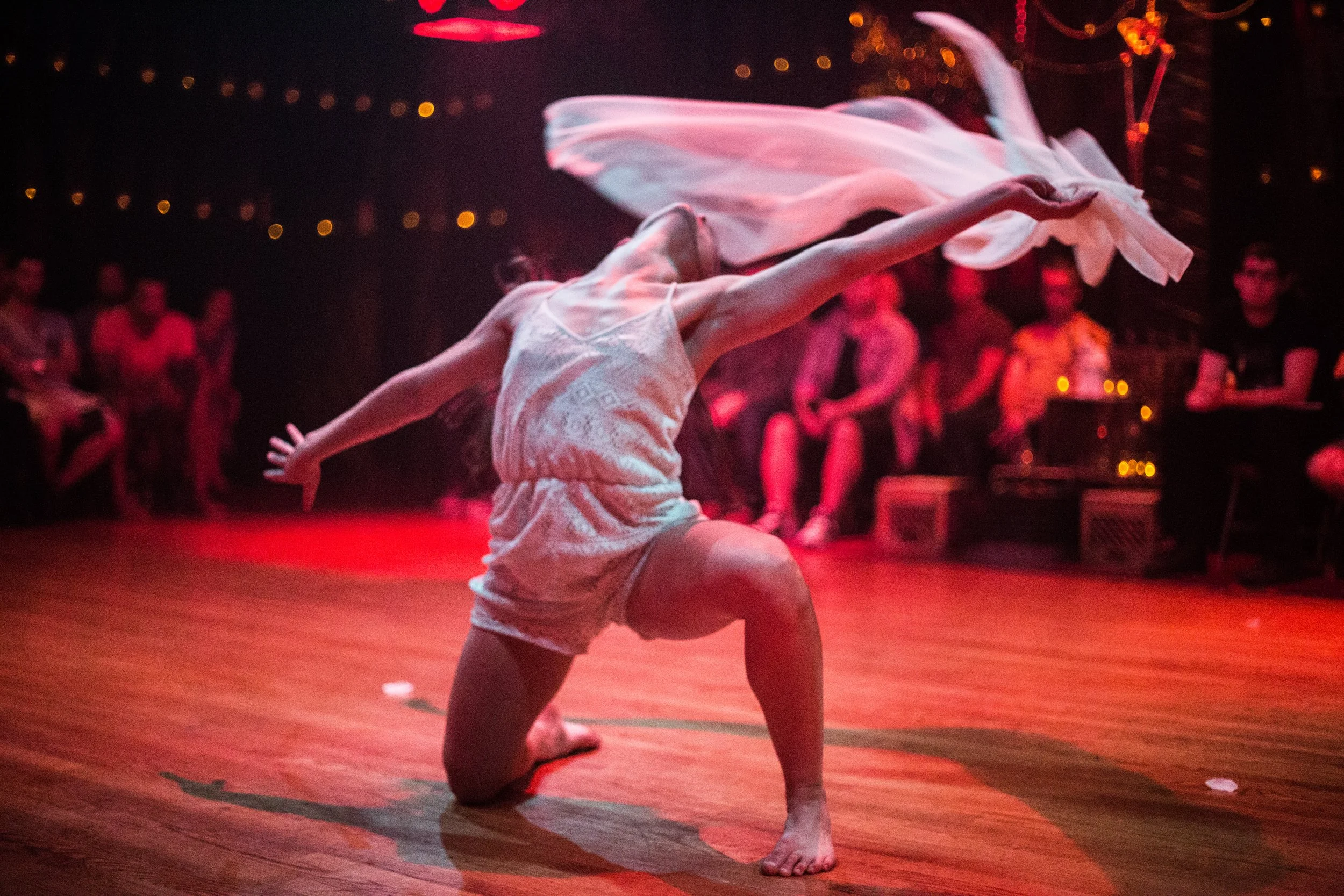
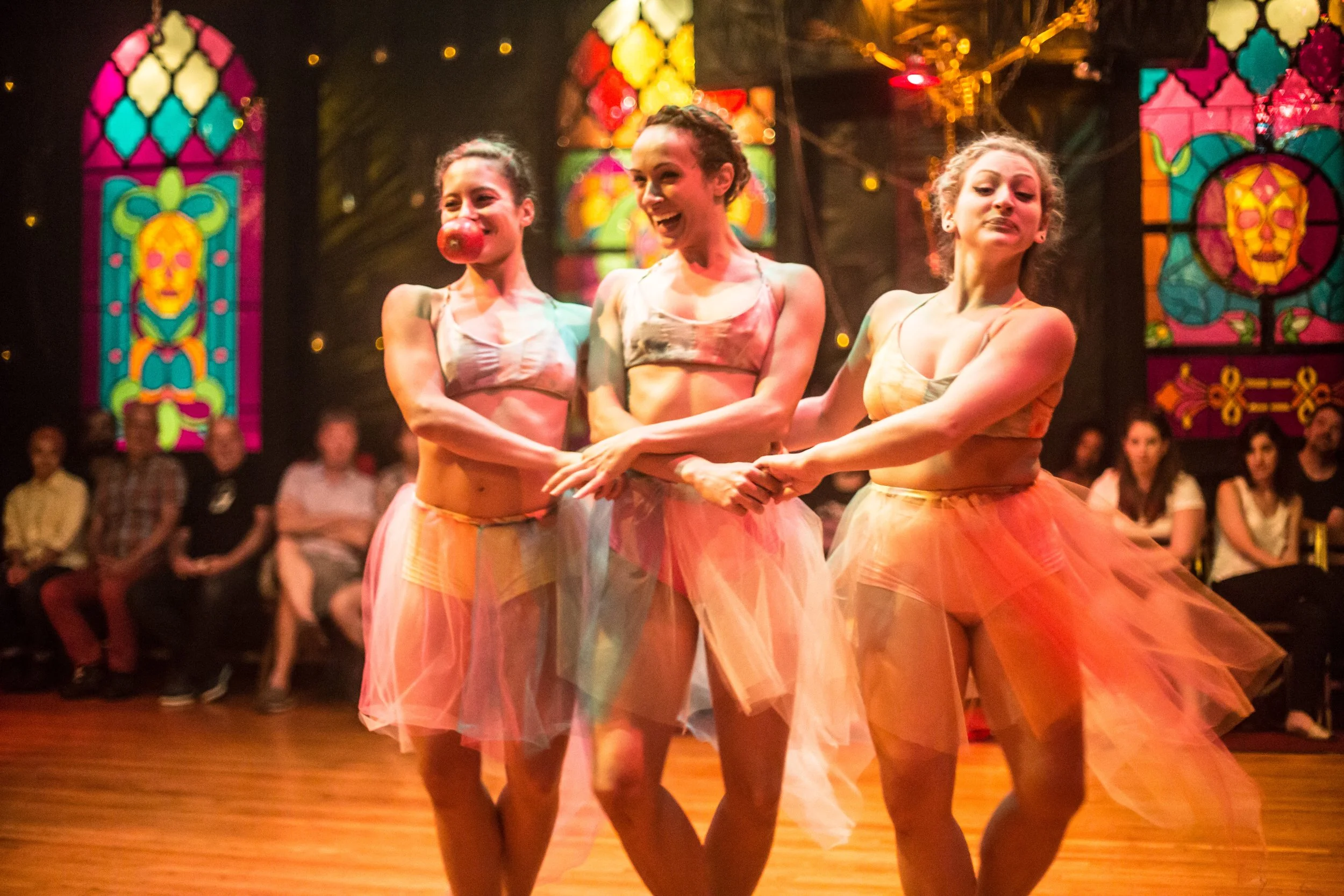
Created for the 2015 Philadelphia Fringe Festival, PURGATORY transformed Philadelphia’s historic Latvian Society into a theatrical limbo. The show asked a simple question. What if purgatory is not somewhere we go when we die, but somewhere we are already living?
The timing of the production gave the subject another layer. PURGATORY premiered just months after the Supreme Court legalized same sex marriage nationwide and only weeks before Pope Francis arrived in Philadelphia. Montana used that moment to confront the complicated relationship between queer identity and organized religion.
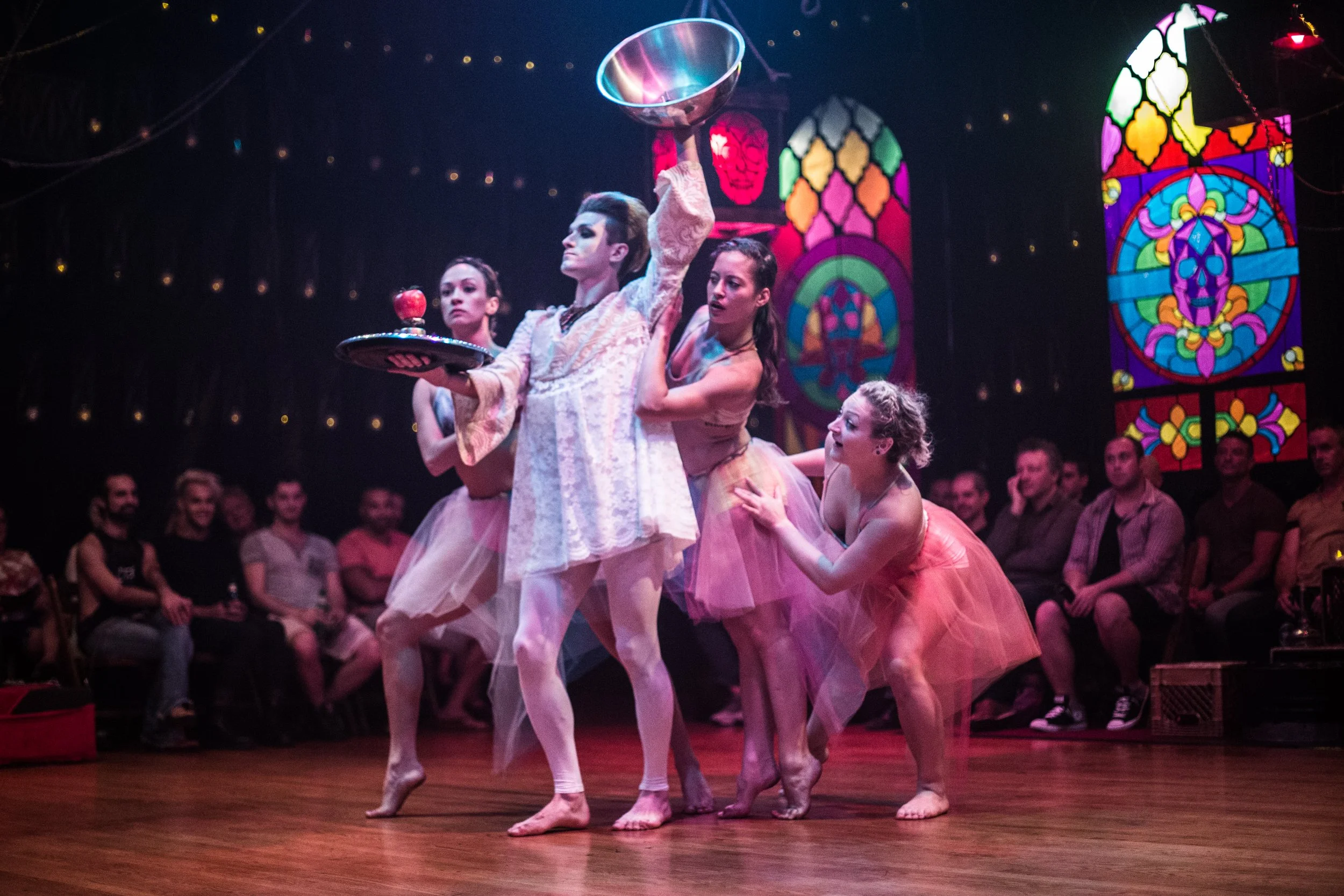
Christian imagery was taken apart and rebuilt inside Montana’s world. Religion became something physical that the performers could wrestle with. Humor often made its way into the show before giving way to something much more personal.
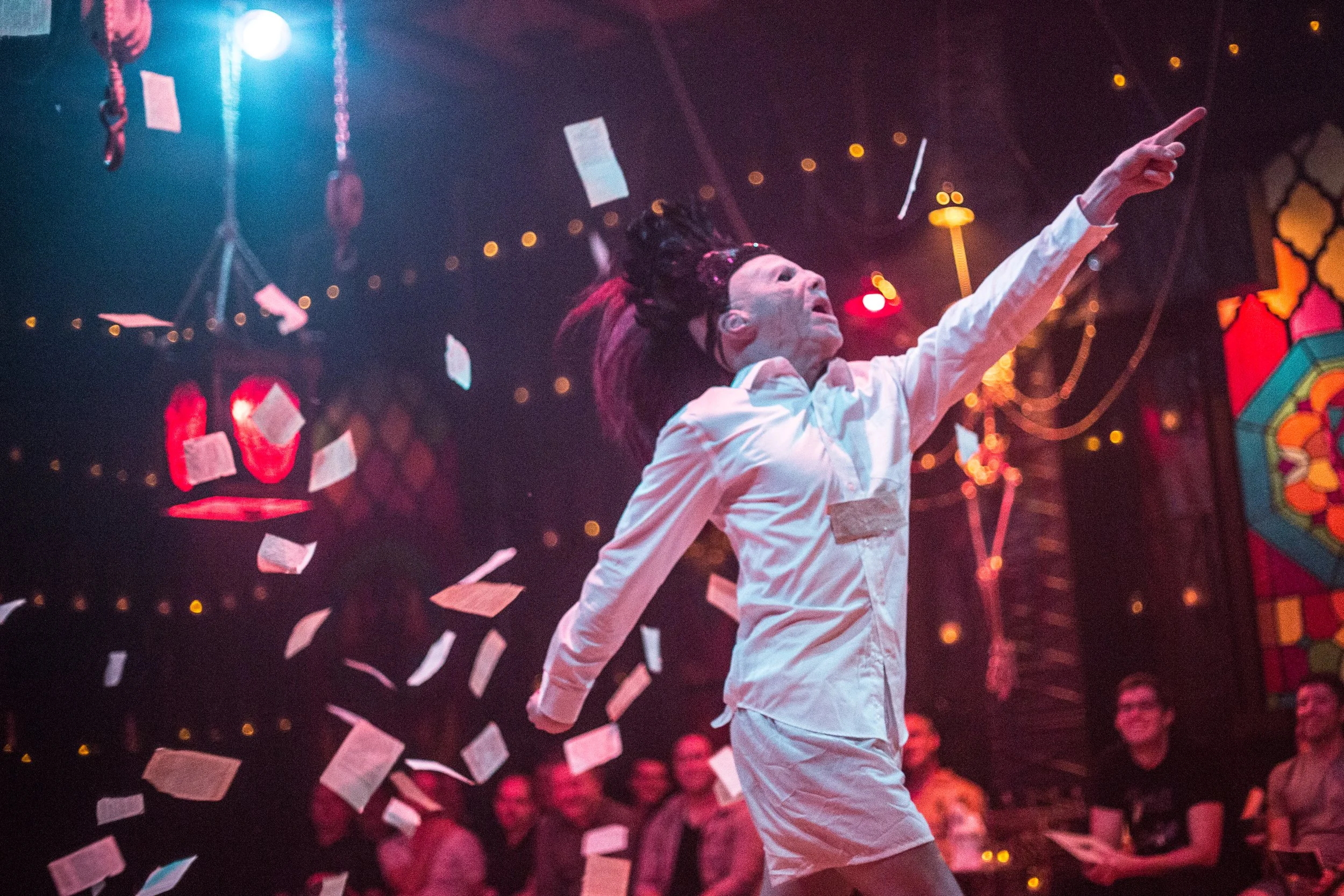
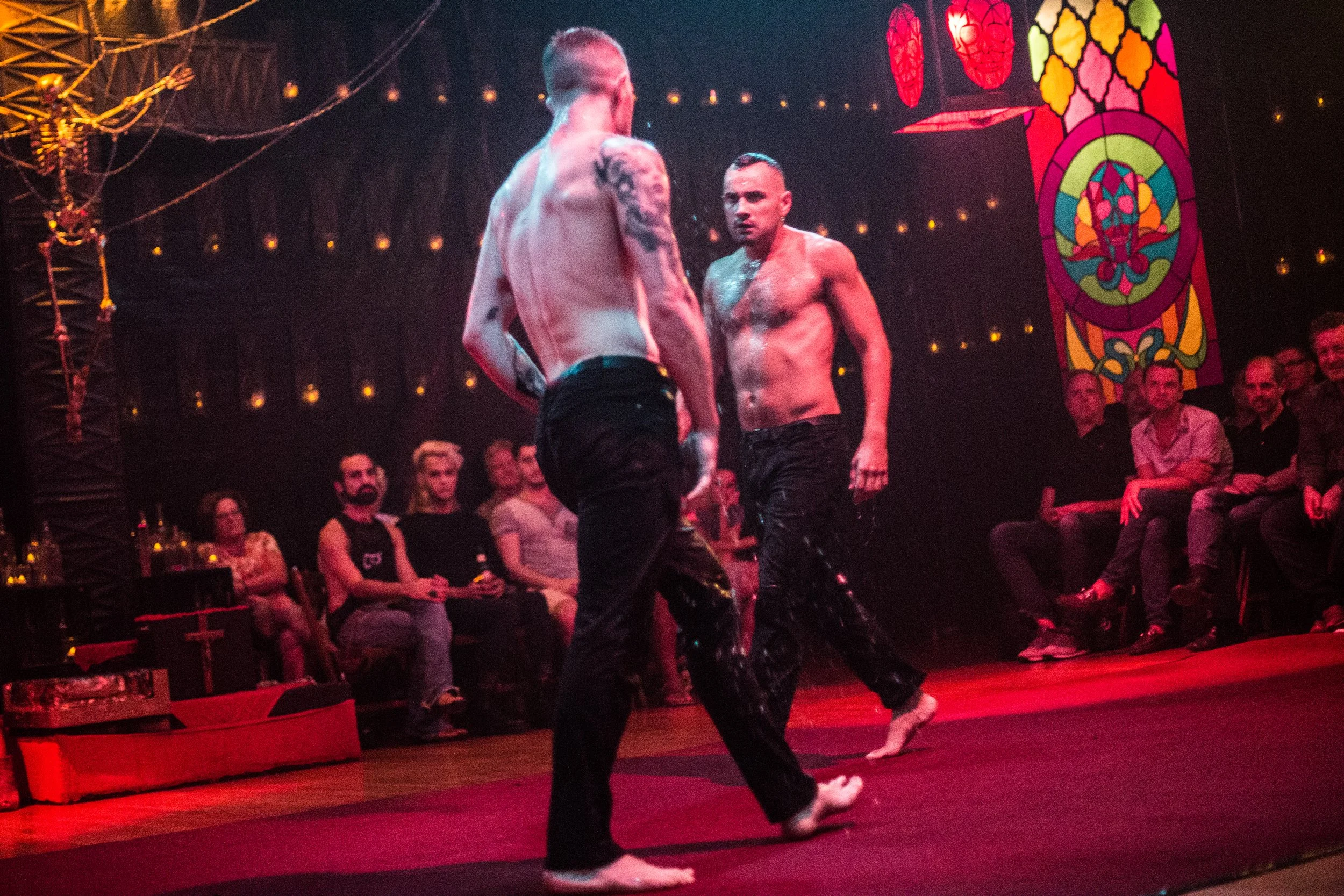
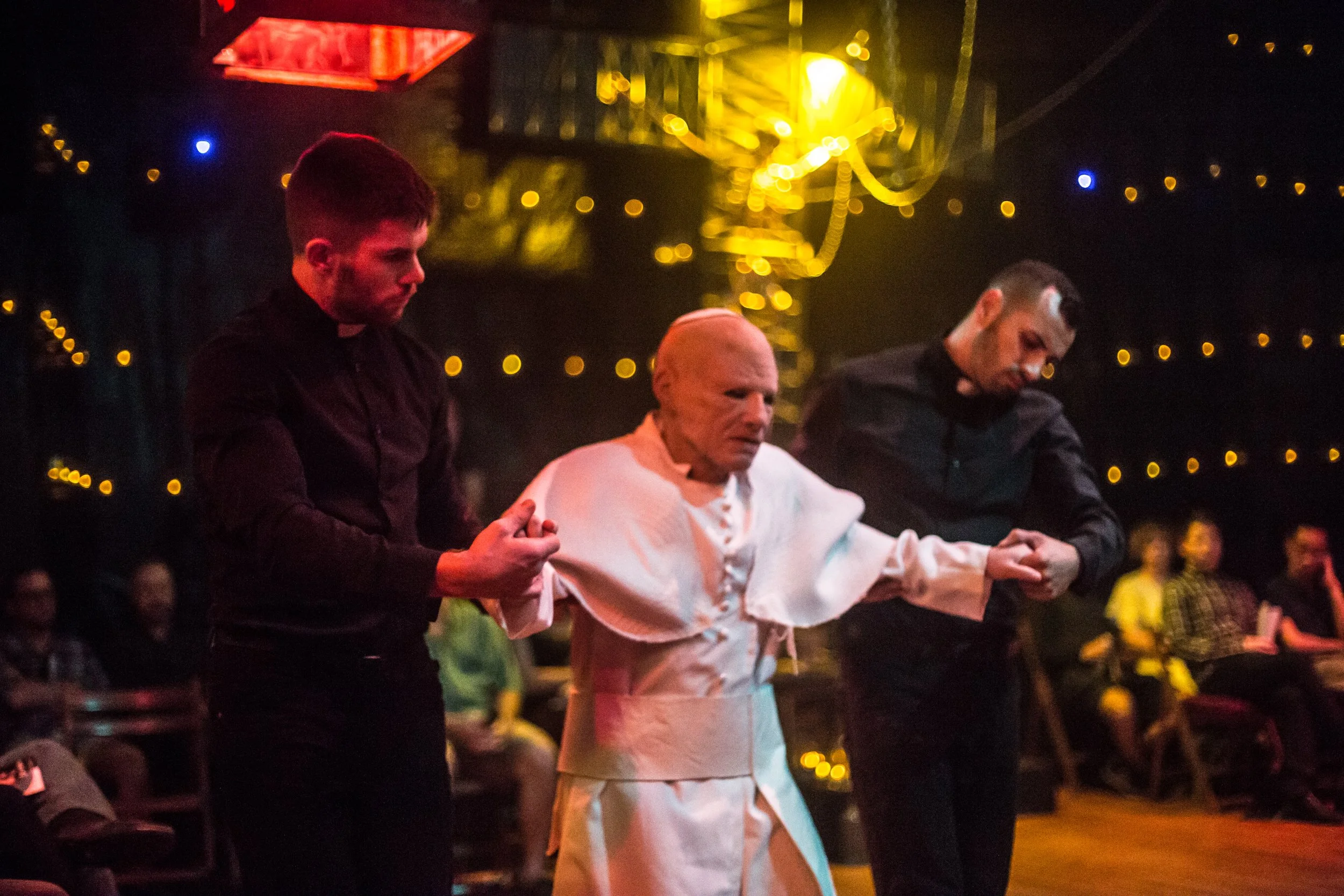
One character appeared as the Pope before disappearing behind closed doors and transforming into a drag queen. In another scene, two men performed an erotic duet in which they aggressively baptized one another with buckets of water. The ritual became a physical search for some kind of redemption from shame.
-
PURGATORY was also the first production where Montana’s feelings about Catholicism really began to take shape in his work. Growing up in rural Montana, organized religion was one of the first institutions that made him feel that he did not belong or that who he was was not valid. In PURGATORY, he began taking the imagery and rituals of Catholicism and reclaiming them through his own queer perspective. It opened a subject Montana would continue to examine more deeply in the years that followed.
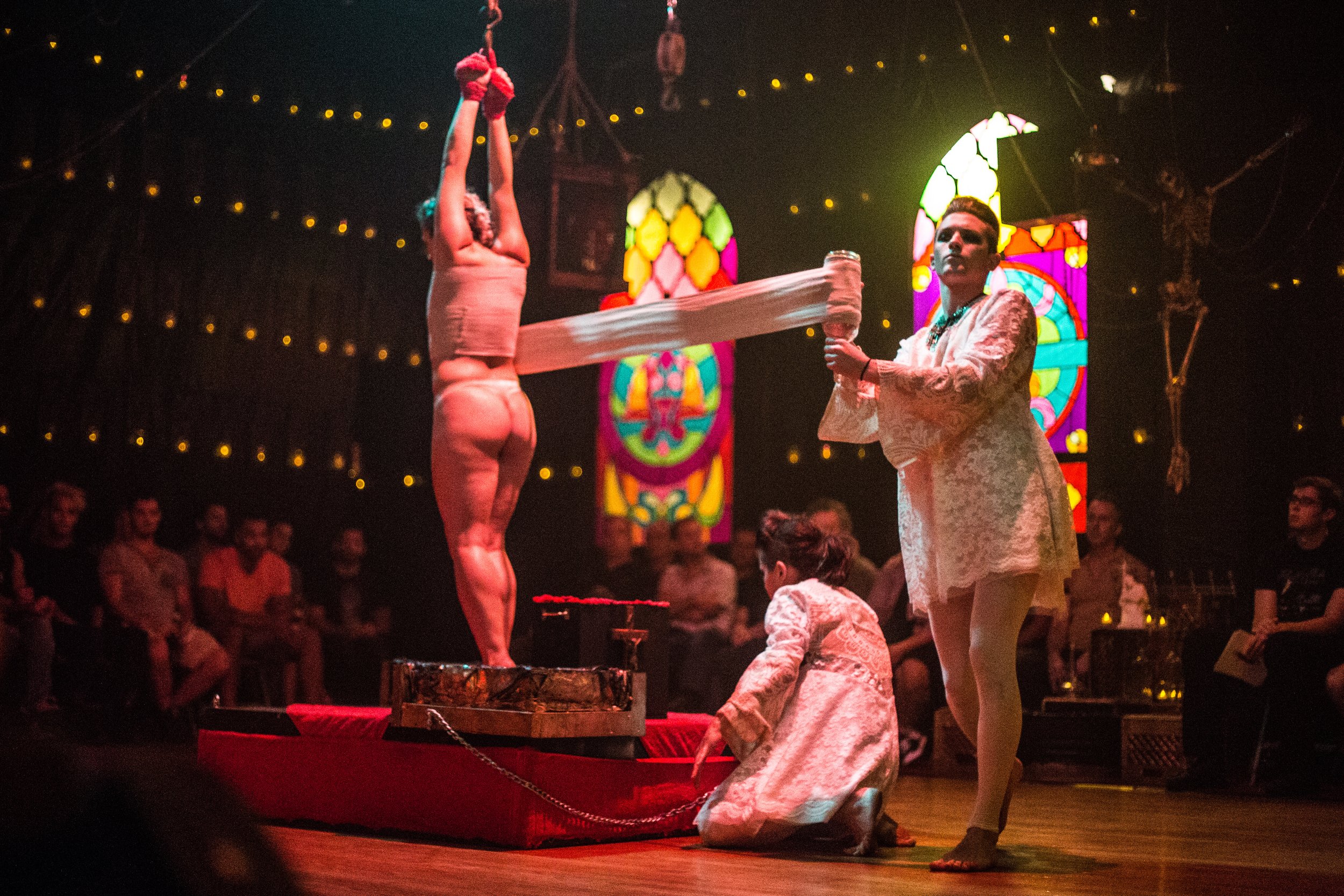
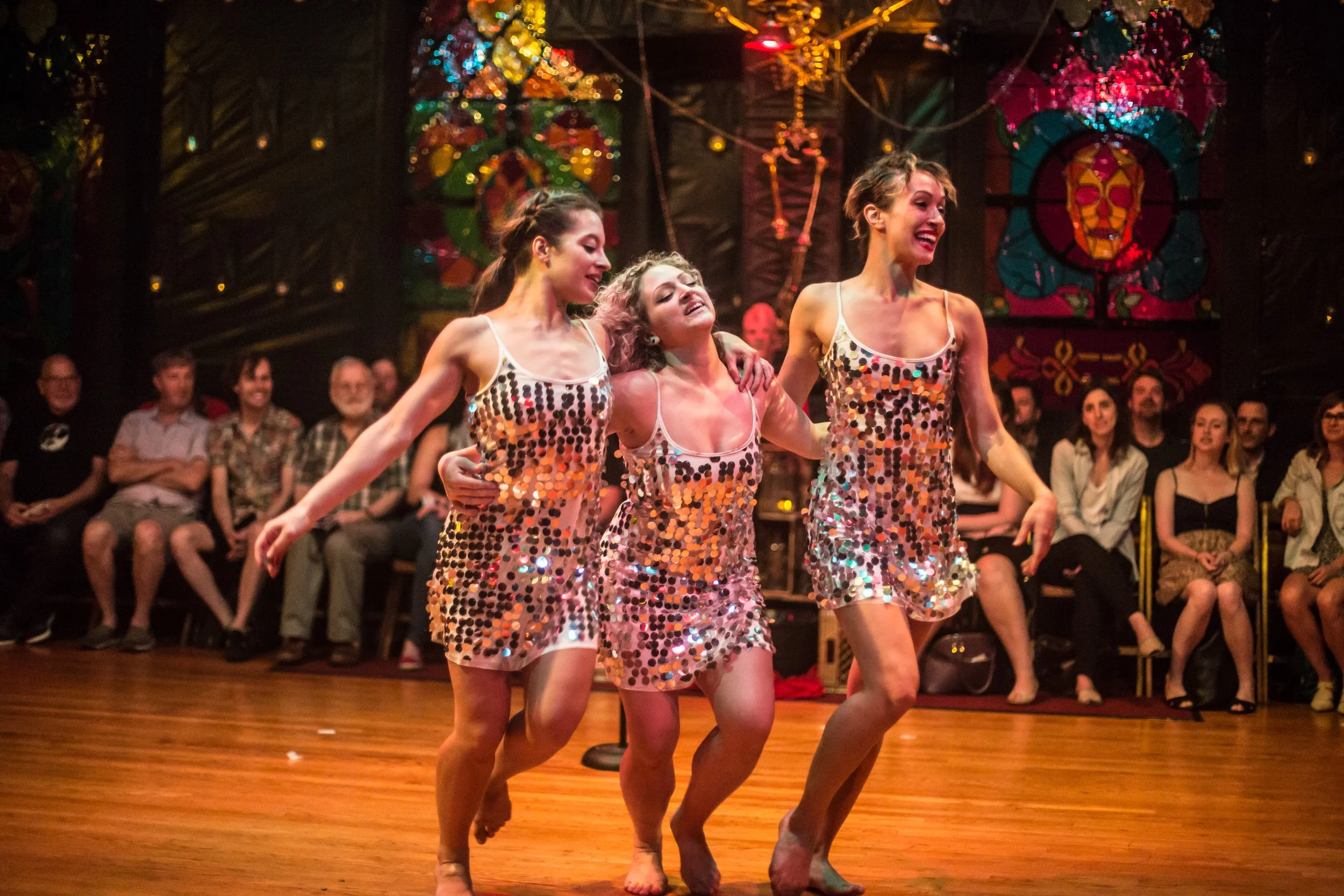
The environment itself was built entirely by hand. Four fifteen foot crosses ran along the sides of the room with gold skeletons hanging from them. Massive hand constructed stained glass windows were erected throughout the space, while thousands of tea lights lined the walls. Together, they transformed the room into Montana’s own version of a sacred space and completely engulfed the audience in a queer drenched religious world.
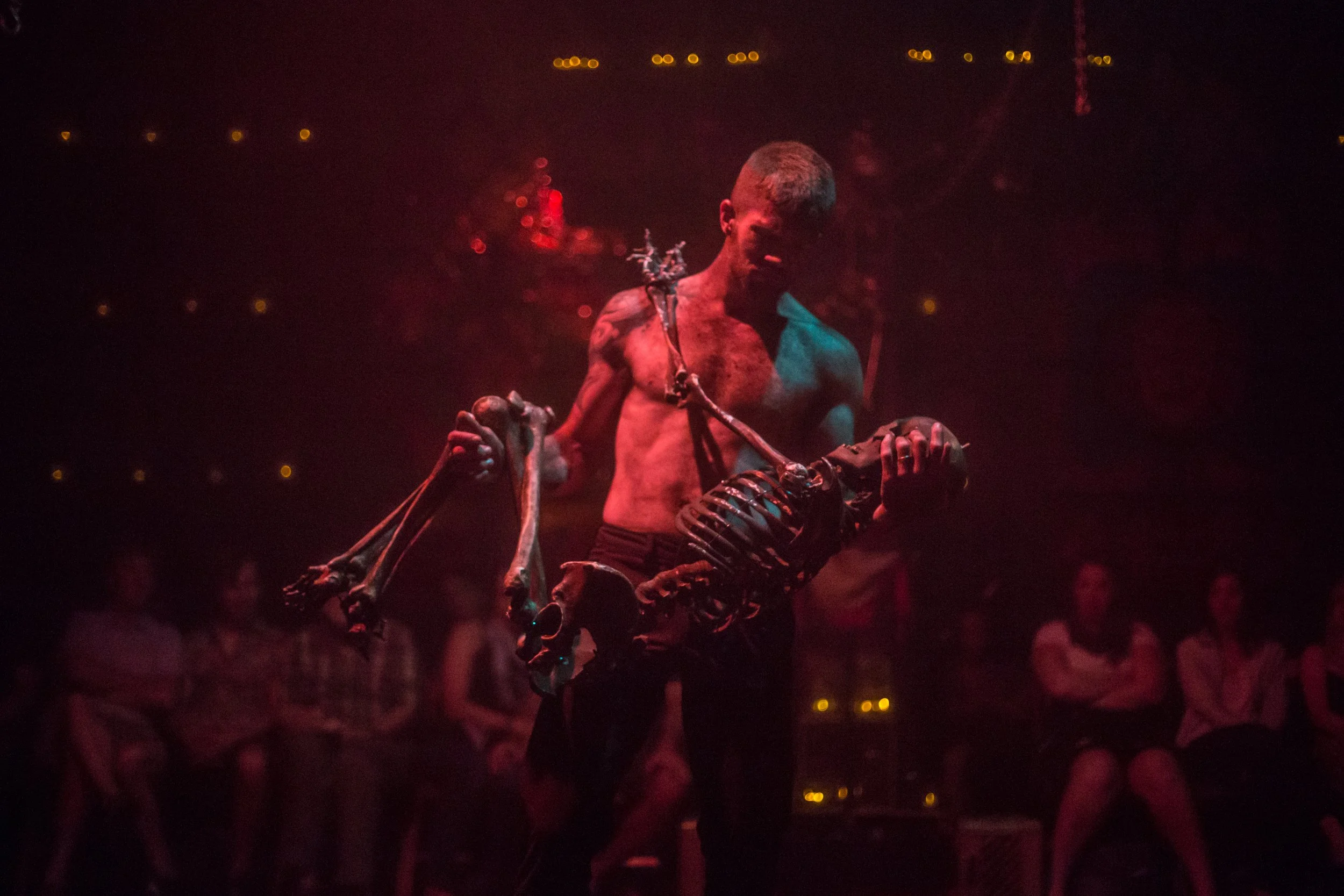
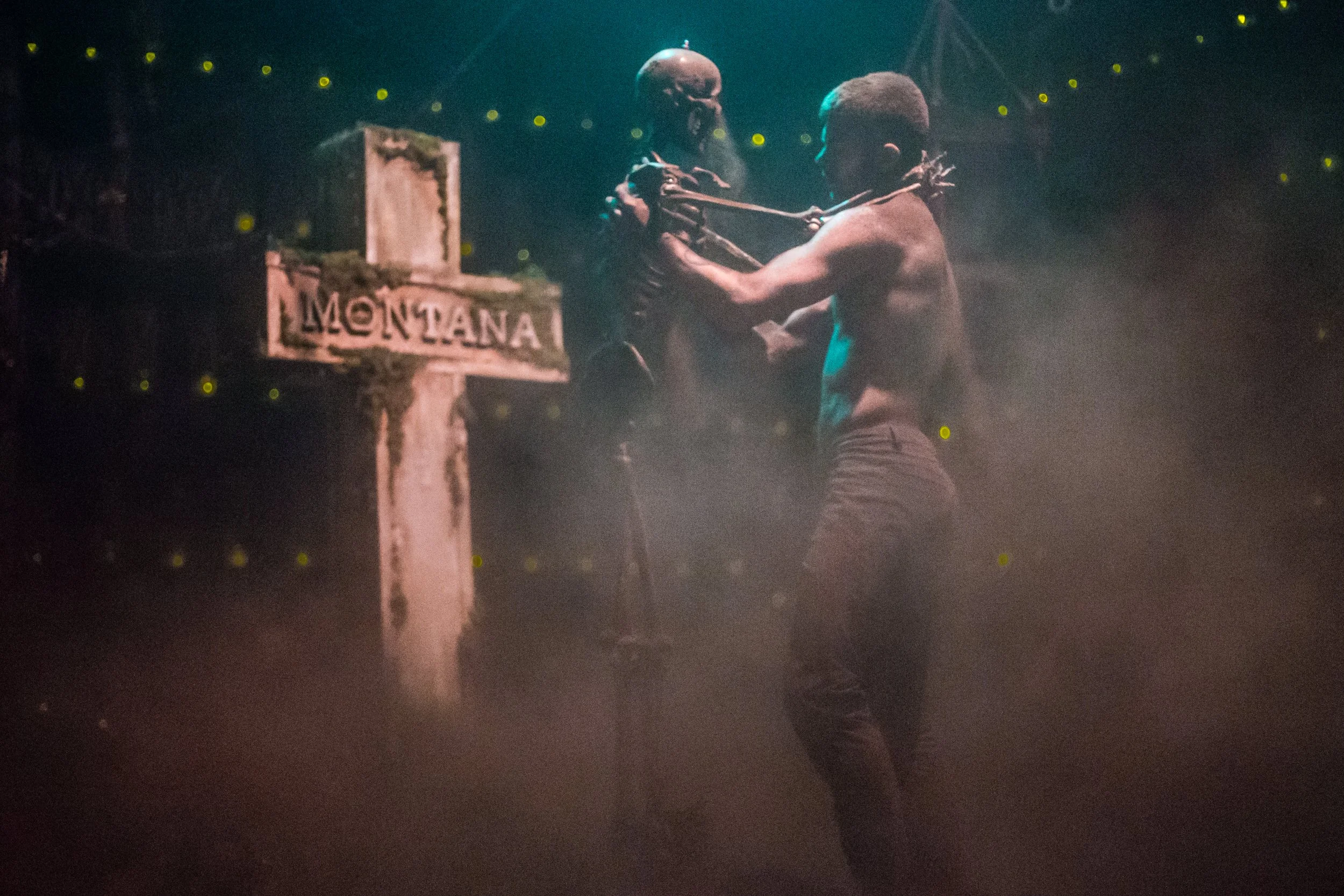
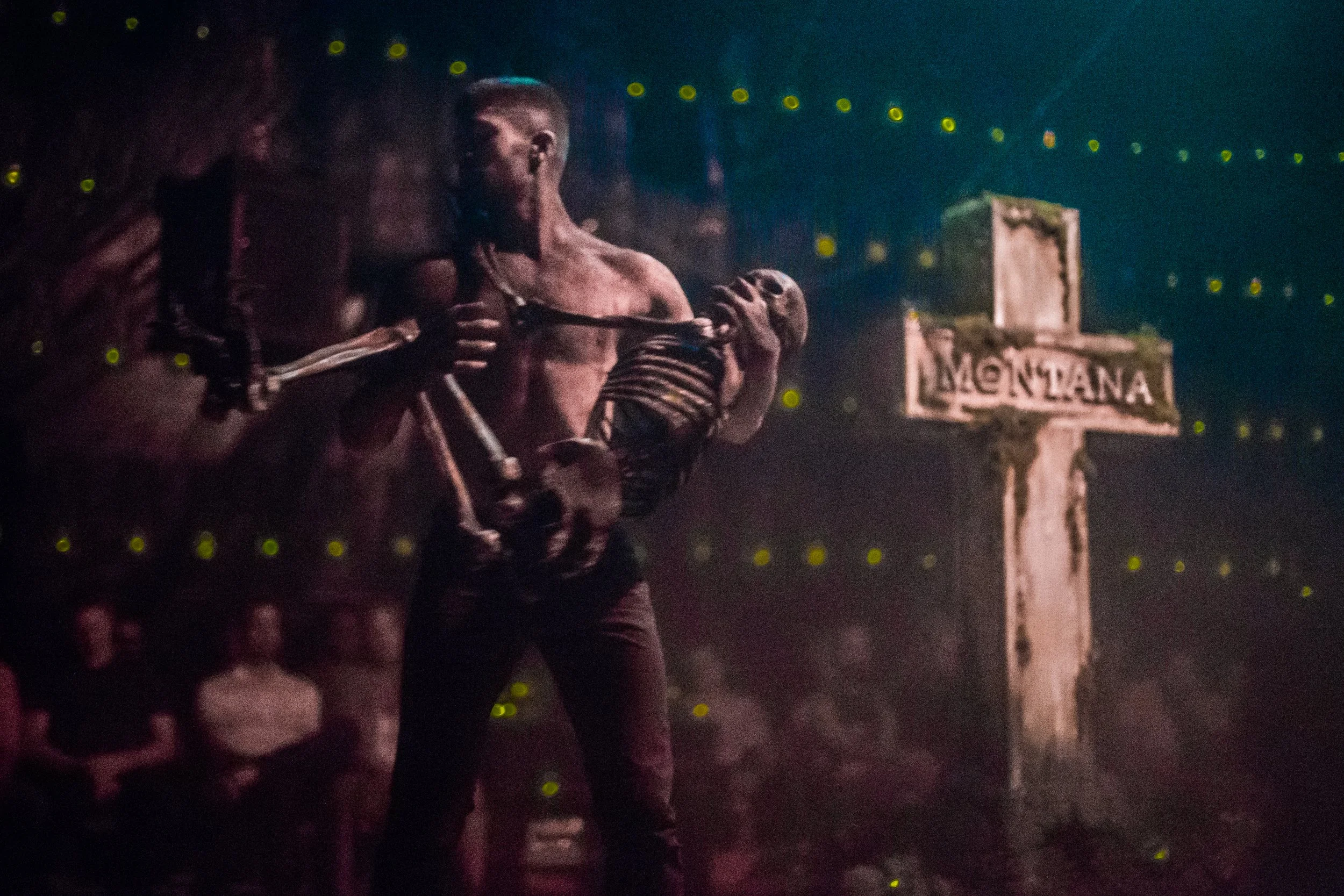
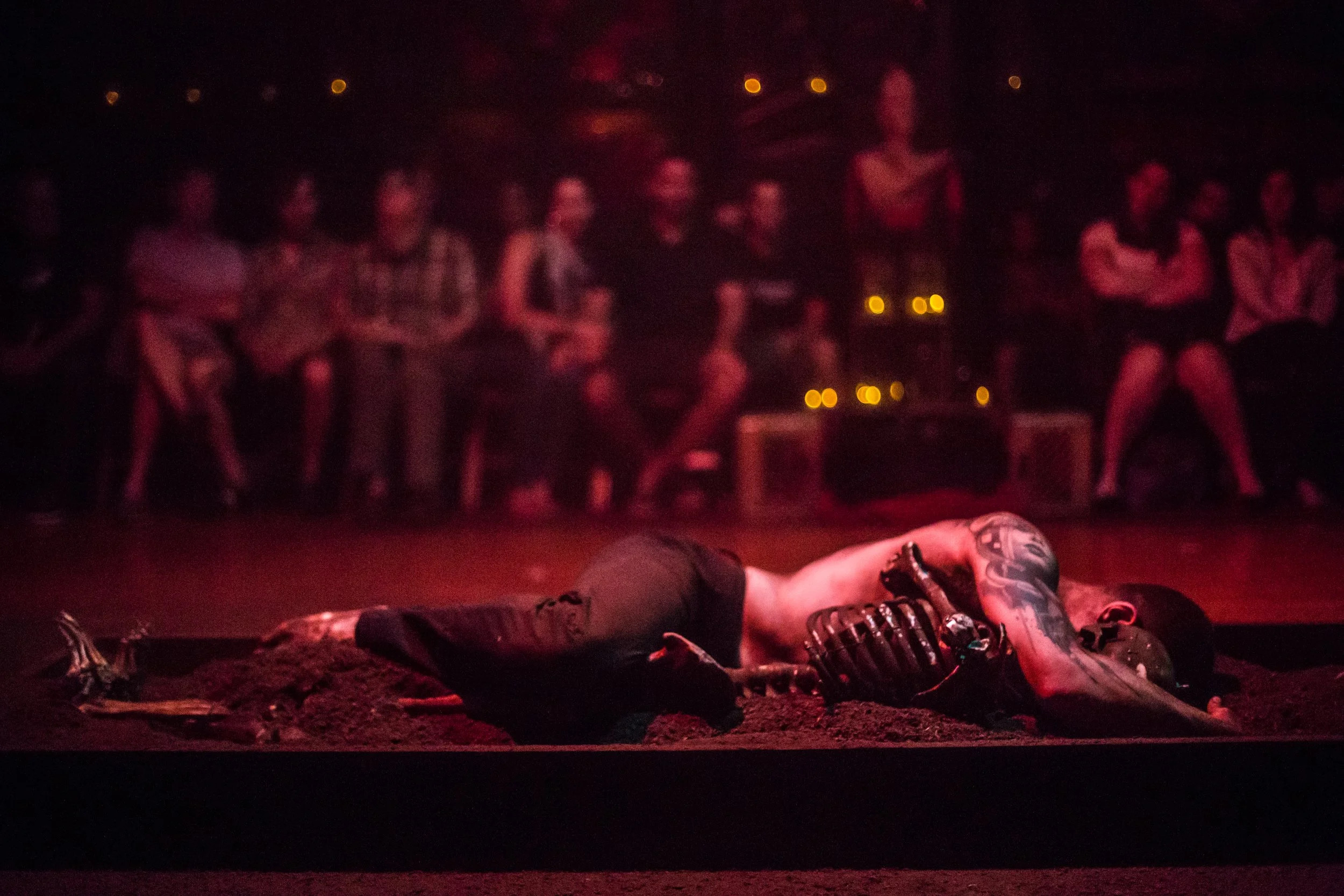
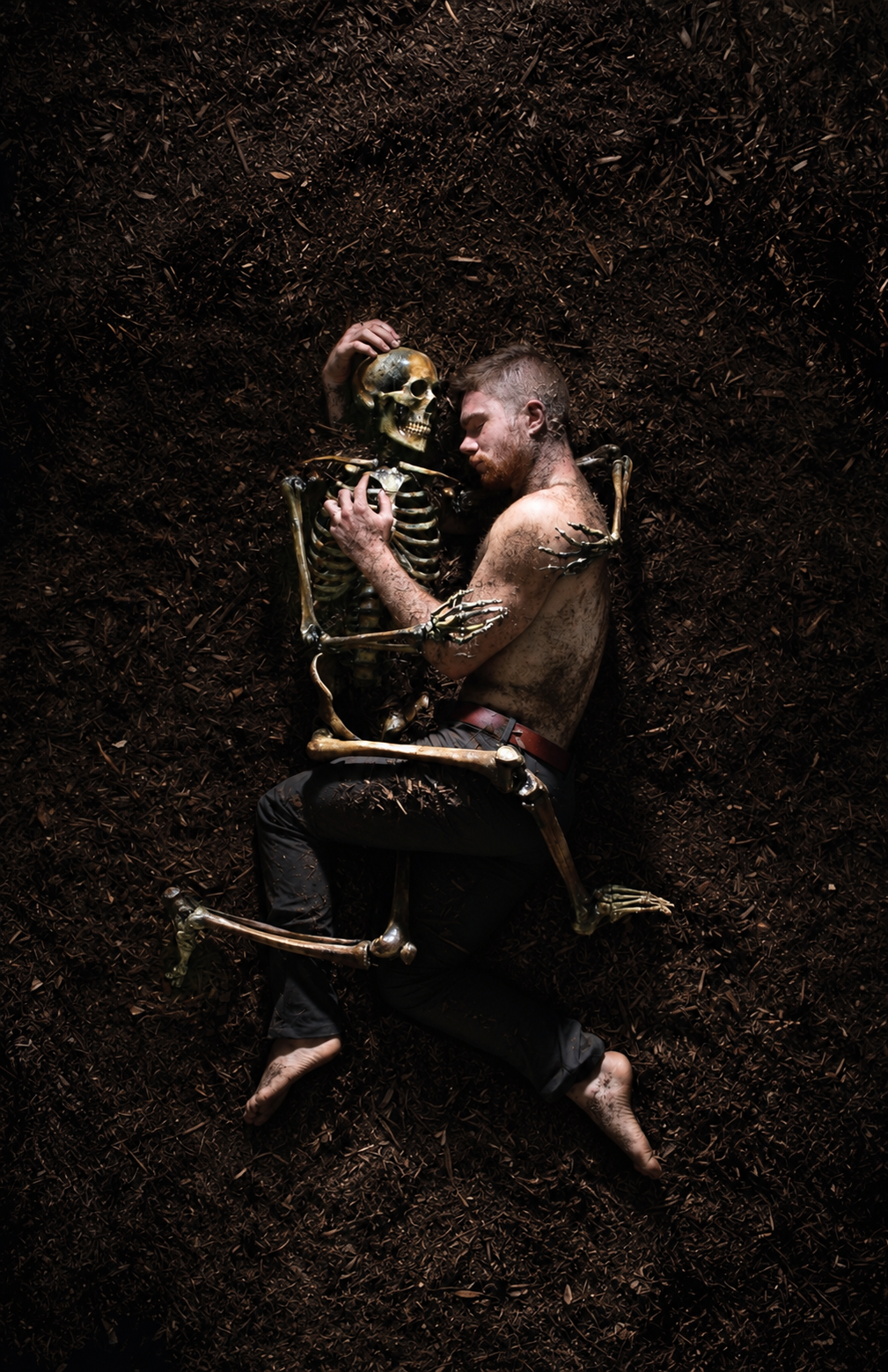
The final scene became one of the defining images of PURGATORY. Montana unearthed the skeletal remains of a loved one from a bed of dirt and danced with the skeleton in his arms. He eventually carried the remains into a coffin and climbed inside with them. Members of the cast closed the lid and nailed the coffin shut while “Down to the River to Pray” played from inside. The hammering stopped, and the audience was simply left to go without any bows or encores.
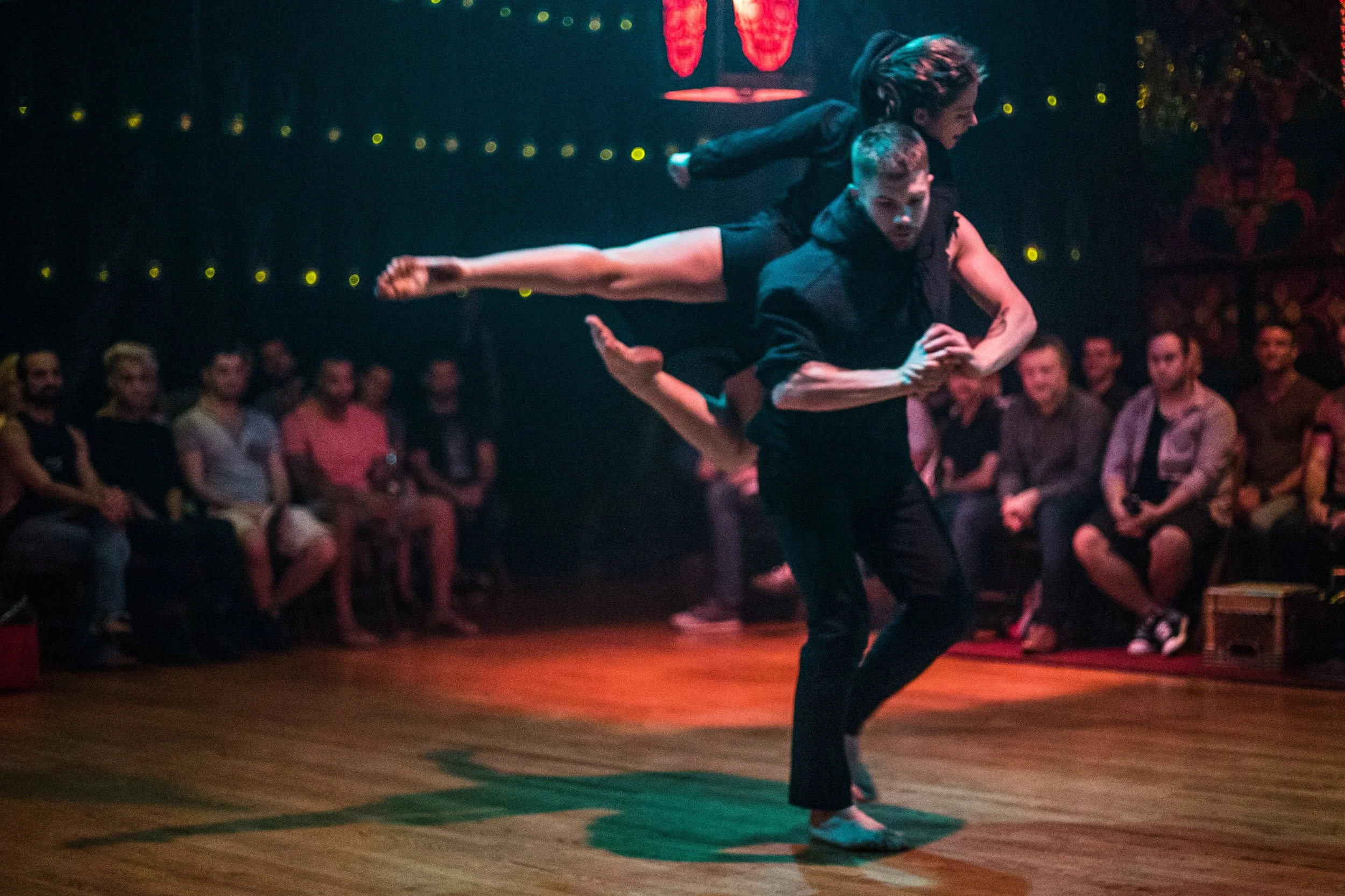
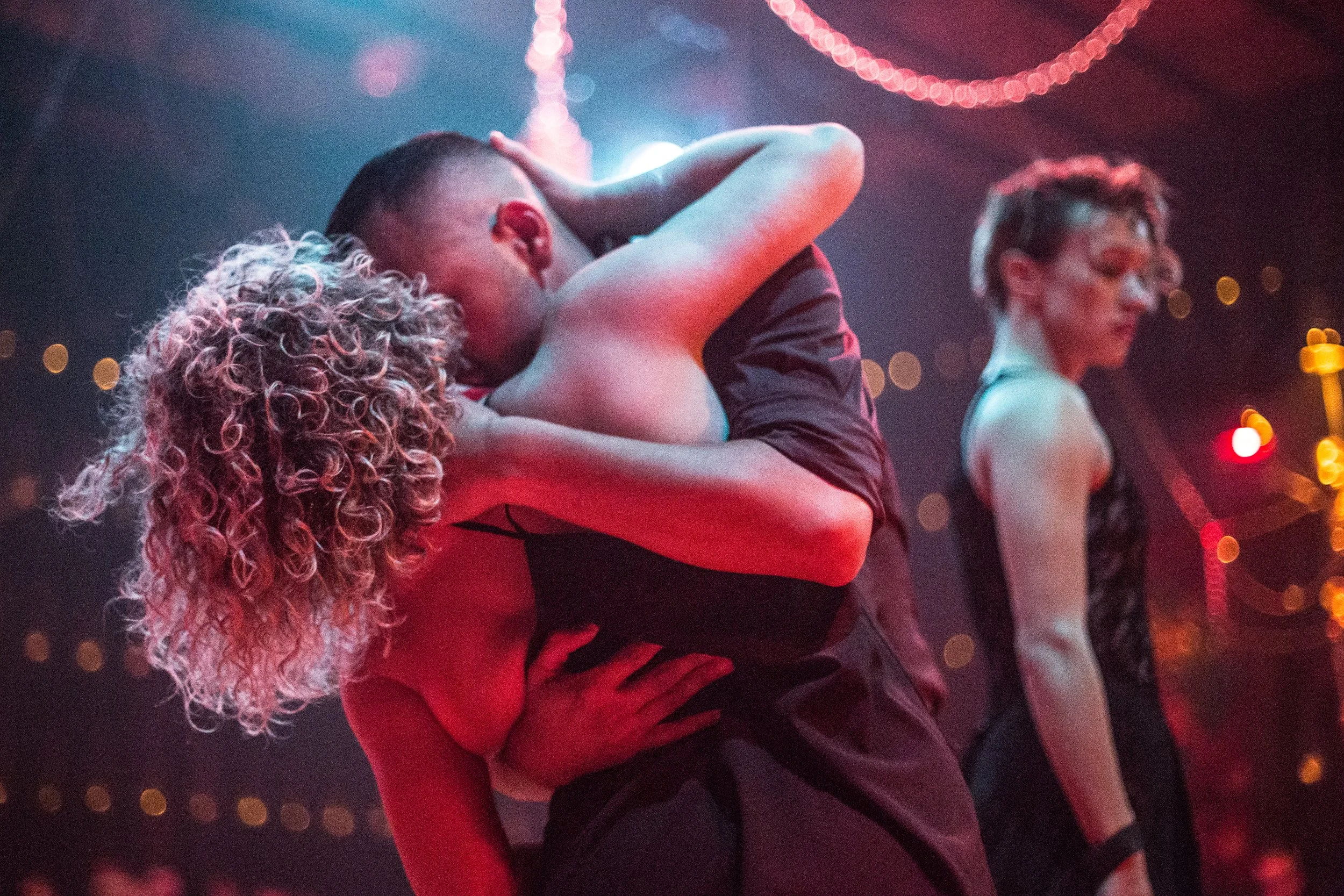
Phindie praised the “intricate and beautiful interactive set and props” and described the production as a “haunting and tense experience.” The publication also highlighted the choreography and the collision between queer identity and organized religion.
The production received significant attention during the Fringe. Philadelphia Magazine selected PURGATORY as one of its “9 Must See Independent Shows” of the festival, while PhillyVoice included it among the Fringe productions it was most excited to see.
At its core, PURGATORY was less interested in heaven and hell than in everything that happens in between. It looked at what we carry with us and the things that keep us from moving forward.